
CHEMICAL PEEL
FAQ’S on chemical peel!
-
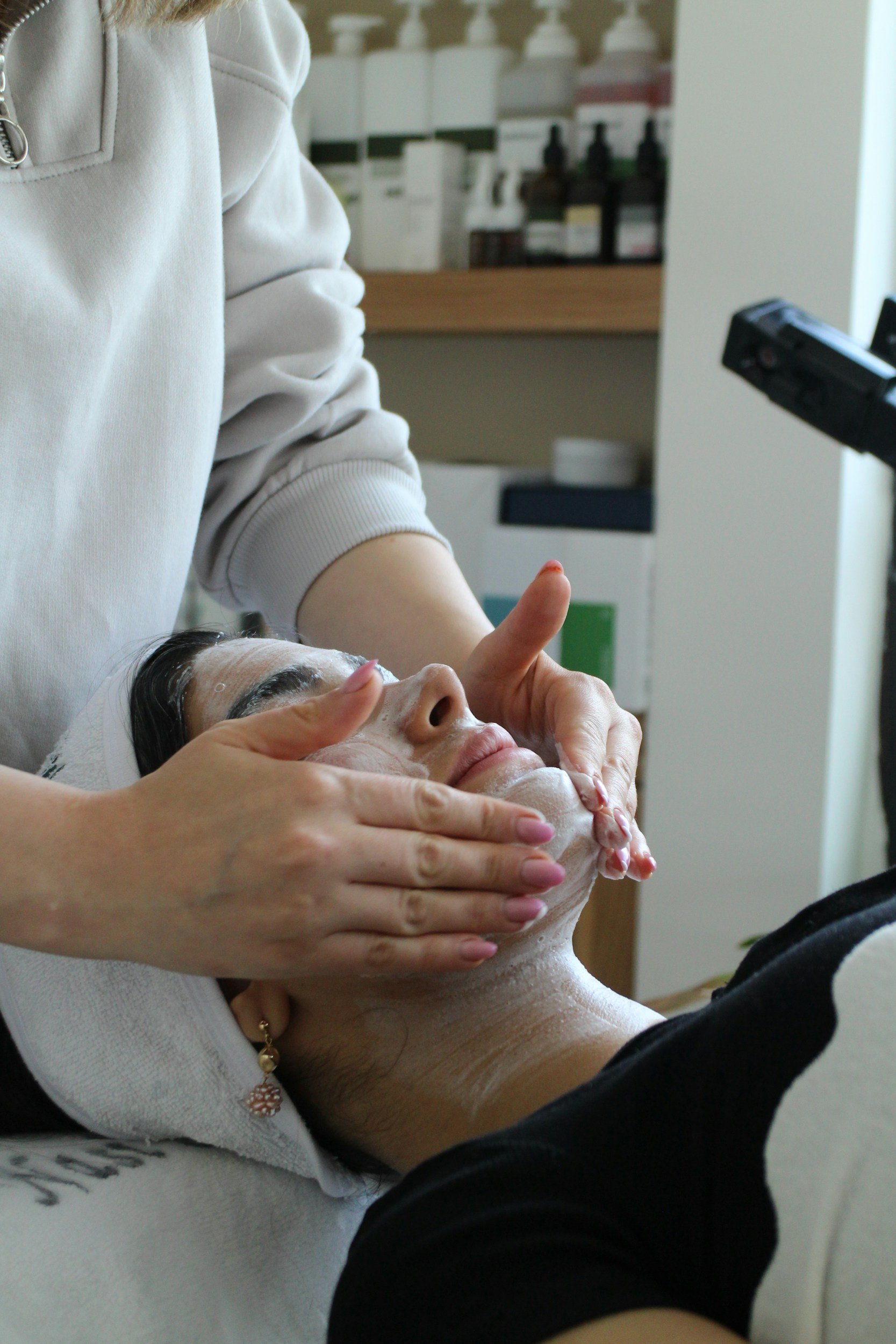
A chemical peel is a professional skin treatment that uses a controlled exfoliating solution to remove dead skin cells and encourage fresh skin renewal. It helps improve concerns like dullness, uneven texture, acne, pigmentation, and fine lines, leaving the skin looking smoother, clearer, and brighter.
-
5–7 Days Before
Avoid retinol, tretinoin, AHA/BHA acids, scrubs and exfoliants
Avoid waxing, threading, laser and electrolysis
Avoid tanning and excessive sun exposure
48 Hours Before
Avoid self-tanner
Avoid excessive heat, sweating or anything that irritates the skin
Keep your skin hydrated
Day of Treatment
Arrive with clean skin
No makeup, lotions or facial oils
Let your provider know about any new medications, skincare reactions or recent cold sores
Inform your provider if you are pregnant or breastfeeding
-
First 24 Hours
Do not touch, pick or peel your skin
Avoid makeup
Avoid exercise, sweating, heat and saunas
Use only gentle cleanser and moisturizer
Mild redness, warmth, tightness or sensitivity can be normal.
Next 2–3 Days
Dryness, flaking or peeling may occur
Keep skin clean and moisturized
Avoid retinol, acids, scrubs and exfoliation
Avoid direct sun exposure
Let peeling skin shed naturally
Until Fully Healed
Avoid tanning
Avoid saunas and steam rooms
Do not exfoliate or pick peeling skin
Slowly reintroduce active skincare
Wear SPF 30+ every day
-
You may experience:
Redness
Dryness
Tightness
Mild sensitivity
Flaking or peeling
Mild swelling
The amount of peeling will vary depending on your skin and the type of peel used.
-
Maybe. Some clients experience noticeable peeling, while others only have mild dryness or flaking. Your skin does not need to visibly peel for the treatment to work.
-
Downtime depends on the strength of your peel. Most clients experience mild redness, dryness or flaking for several days.
-
Skin often begins to look brighter and smoother as it heals, with continued improvement over the following 1–2 weeks.
-
It depends on your skin concerns. A series may be recommended for pigmentation, acne, post-acne marks or uneven texture.
-
No. Allow your skin to shed naturally. Picking or peeling can cause irritation and increase the risk of pigmentation.
-
Gentle skincare + hydration + daily SPF.
Sun protection is especially important after a chemical peel to protect your newly treated skin.
-
Contact us if you experience:
Severe or worsening pain
Intense burning
Significant swelling
Increasing redness or warmth
Pus or signs of infection
Blistering
Unexpected darkening or discoloration
If you are unsure whether your skin is healing normally, contact your provider.